
Dr. Kaoutar
El Maghraoui
Principal Research Scientist at IBM Research AI Platforms. Adjunct Professor at Columbia University. ACM Distinguished Speaker & Member. Pioneering AI hardware-software co-design for the next generation of intelligent systems.


Shaping the Future of AI
Two decades of pioneering research at the intersection of AI, hardware, and distributed systems.
Dr. Kaoutar El Maghraoui is a Principal Research Scientist at IBM Research AI Platforms and the Principal Investigator of the AI Hardware Center experimental testbed. She focuses on deep technical work in hardware-software co-design for IBM's next-generation AI accelerators, while leading cross-functional teams across model enablement, systems optimization, and open-source tooling.
She is also an Adjunct Professor at Columbia University, teaching High-Performance Machine Learning and Scalable Large Language Models. Her research spans efficient LLM inference on novel architectures, analog in-memory computing, neural architecture search, and AI systems optimization — from silicon to software.
Recognized as an ACM Distinguished Member (top 10% worldwide) and ACM Distinguished Speaker, she has delivered over 60 keynotes and invited talks at major international conferences. She holds 17 US patents and has published extensively in top-tier venues including Nature Communications, ICLR, NeurIPS, ASPLOS, and ICML.
Current Roles
Principal Research Scientist & Technical Lead
IBM Research AI Platforms · PI, AI Hardware Center Testbed
Adjunct Professor
Columbia University
ACM Distinguished Speaker
Association for Computing Machinery
Science Advisory Board Member
University at Albany — Emerging AI Systems
Foundry Advisor
UM6P — Mohammed VI Polytechnic University
Global Vice-Chair
Arab Women in Computing (ArabWIC)

Advancing AI at Every Layer
From silicon to software — building the foundations for the next era of artificial intelligence.
AI Hardware-Software Co-Design
Leading the development of optimized AI model mapping and deployment strategies for next-generation AI accelerators, bridging the gap between algorithm design and hardware capabilities.
Analog In-Memory Computing
Pioneering neural architecture search techniques for analog in-memory computing, enabling energy-efficient AI inference through novel hardware paradigms.
LLM Optimization & Inference
Developing dynamic KV cache management and efficient inference techniques for large language models, accelerating enterprise AI deployment at scale.
Neural Architecture Search
Creating multi-objective hardware-aware NAS frameworks that automatically discover optimal neural network architectures for specific hardware targets.
Supernetwork-based efficient mapping of deep learning models
Key Research Publications
Selected high-impact publications spanning AI hardware co-design, neural architecture search, and model optimization.
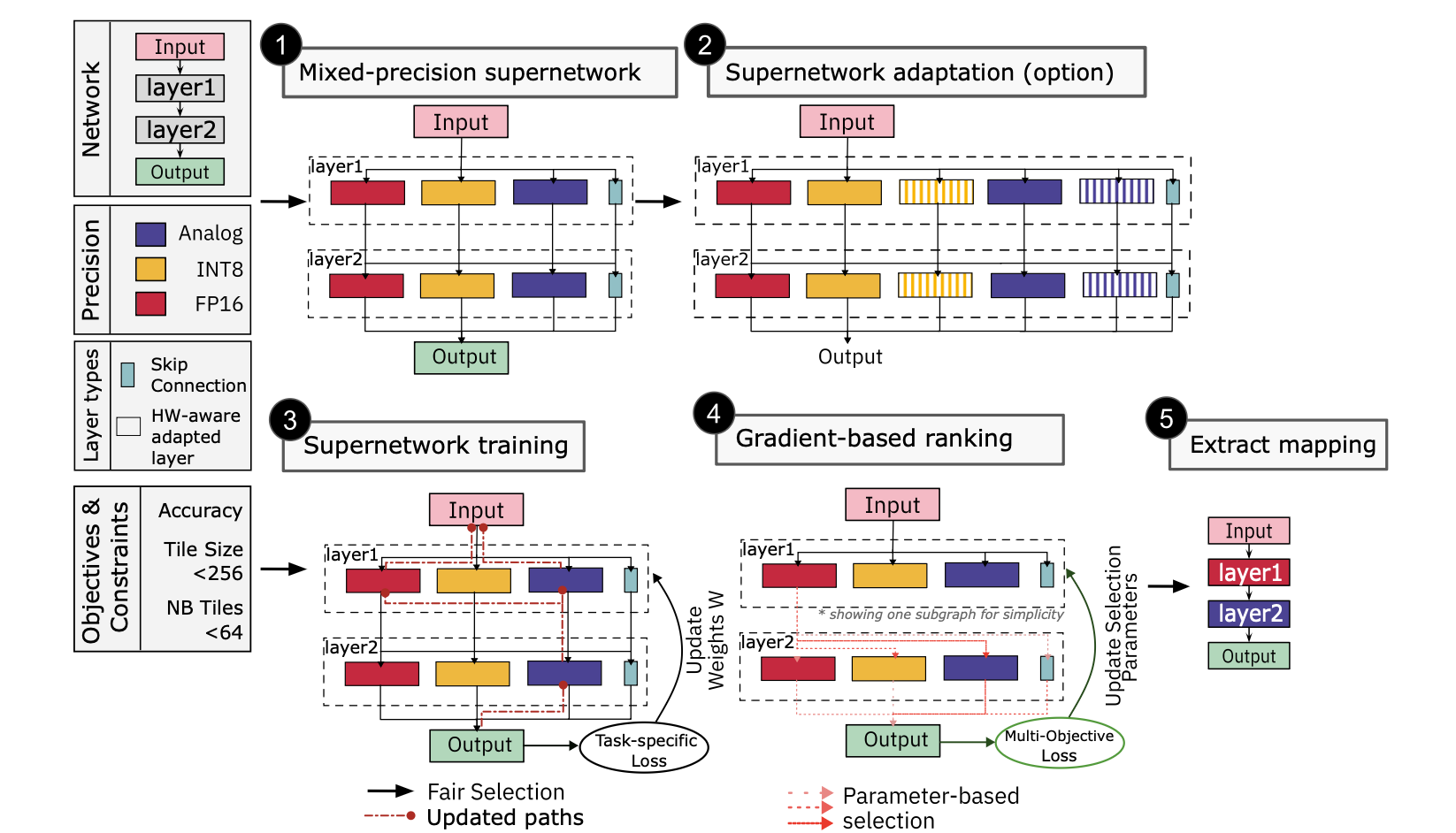
Supernetwork-Based Efficient Mapping of Deep Learning Applications to Mixed-Precision Hardware Using Model Adaptation
Introduces Mixed-Precision Supernetwork (MPS), a unified framework for training mixed-precision supernetworks that seamlessly map deep learning models to heterogeneous analog-digital hardware. MPS produces mappings ~2.2x faster and achieves ~3.4% higher accuracy over fully analog approaches while improving energy efficiency by mapping up to 80% of weights to analog hardware.
H Benmeziane, C Lammie, I Boybat, M Rasch, M Le Gallo, A Vasilopoulos, H Tsai, GW Burr, V Narayanan, K El Maghraoui, A Sebastian
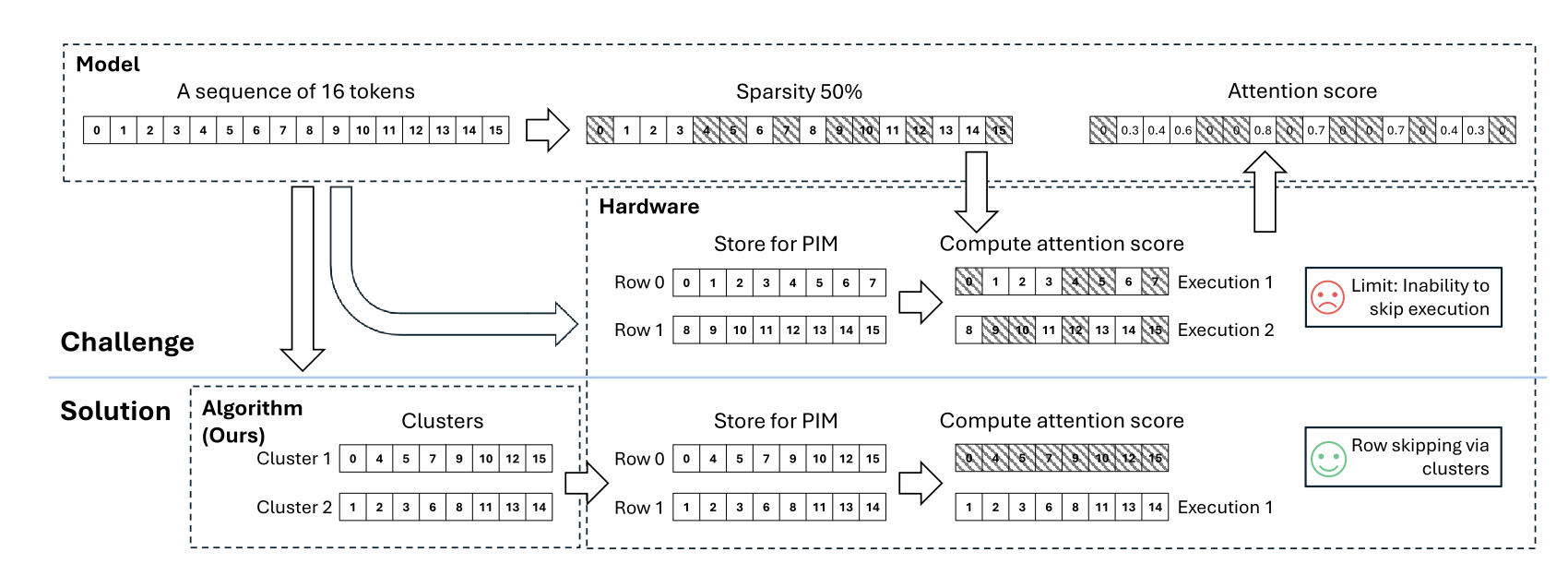
STARC: Selective Token Access with Remapping and Clustering for Efficient LLM Decoding on PIM Systems
A novel approach for efficient large language model decoding on Processing-In-Memory systems, using selective token access with remapping and clustering to dramatically reduce memory bottlenecks.
Z Fan, Y Liu, G Gagnon, Z Liu, Y Hou, H Benmeziane, K El Maghraoui, L Liu

Advancing Fluorescence Detection and Ranging in Scattering Media with Mixture-of-Experts and Evidential Critics
Introduces a Mixture-of-Experts architecture combined with evidential critics for robust fluorescence detection and ranging in challenging scattering environments, advancing scientific imaging capabilities.
I Erbas, F Demirkiran, K Swaminathan, N Wang, NI Nizam, N Yuan, S Ragab, L Chavez, K El Maghraoui, X Intes, V Pandey

Ultra-Low Precision 4-bit Training of Deep Neural Networks
Novel techniques and numerical representation formats to scale the precision of training systems from 8-bits to 4-bits, introducing adaptive Gradient Scaling for quantized gradients.
X Sun, N Wang, CY Chen, J Ni, A Agrawal, X Cui, S Venkataramani, K El Maghraoui, et al.
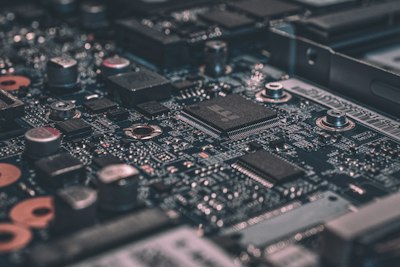
A Flexible and Fast PyTorch Toolkit for Simulating Training and Inference on Analog Crossbar Arrays
A comprehensive PyTorch toolkit enabling efficient simulation of analog in-memory computing for neural network training and inference on crossbar arrays.
MJ Rasch, D Moreda, T Gokmen, M Le Gallo, F Carta, C Goldberg, K El Maghraoui, et al.

A Comprehensive Survey on Hardware-Aware Neural Architecture Search
An extensive survey and taxonomy of hardware-aware NAS methods, covering search strategies, hardware metrics, and deployment considerations across diverse platforms.
H Benmeziane, K El Maghraoui, H Ouarnoughi, S Niar, M Wistuba, et al.

ModelOps: Cloud-Based Lifecycle Management for Reliable and Trusted AI
A framework for managing the full lifecycle of AI models in the cloud, addressing reliability, trust, and operational efficiency for enterprise AI deployments.
W Hummer, V Muthusamy, T Rausch, P Dube, K El Maghraoui, A Murthi, et al.

Using the IBM Analog In-Memory Hardware Acceleration Kit
Comprehensive guide to the IBM AIHWKit for neural network training and inference on analog in-memory computing hardware, enabling energy-efficient AI acceleration.
M Le Gallo, C Lammie, J Büchel, F Carta, O Fagbohungbe, C Mackin, K El Maghraoui, et al.

Neural Architecture Search for In-Memory Computing-Based Deep Learning Accelerators
A review of NAS techniques tailored for in-memory computing accelerators, bridging the gap between neural network design and emerging hardware paradigms.
O Krestinskaya, ME Fouda, H Benmeziane, K El Maghraoui, A Sebastian, et al.

Deep Compression of Pre-trained Transformer Models
Techniques for dramatically compressing pre-trained transformer models while maintaining accuracy, enabling efficient deployment on resource-constrained hardware.
N Wang, CCC Liu, S Venkataramani, S Sen, CY Chen, K El Maghraoui, et al.

Multi-Objective Hardware-Aware Neural Architecture Search with Pareto Rank-Preserving Surrogate Models
A novel multi-objective NAS framework using Pareto rank-preserving surrogate models to efficiently discover optimal architectures across multiple hardware constraints.
H Benmeziane, H Ouarnoughi, K El Maghraoui, S Niar
Shaping the Next Generation
As Adjunct Professor at Columbia University, I bridge cutting-edge IBM Research with graduate education — equipping students to design, optimize, and deploy AI systems at scale.
Teaching Philosophy
Systems Thinking
Understanding how components interact at scale — from silicon to software stack. Students don't just learn algorithms; they implement them on real hardware and measure the results.
Empirical Rigor
Every claim must be measured and validated. Courses emphasize profiling, benchmarking, and performance analysis as first-class skills alongside theoretical foundations.
Ethical Awareness
Considering the societal implications of AI systems. The energy cost of training, the accessibility of deployment, and the responsibility of building technology that serves everyone.
Institution
Columbia University
Courses
2 Graduate
Focus
AI Systems & HPC
Approach
Research-Driven
In the Classroom
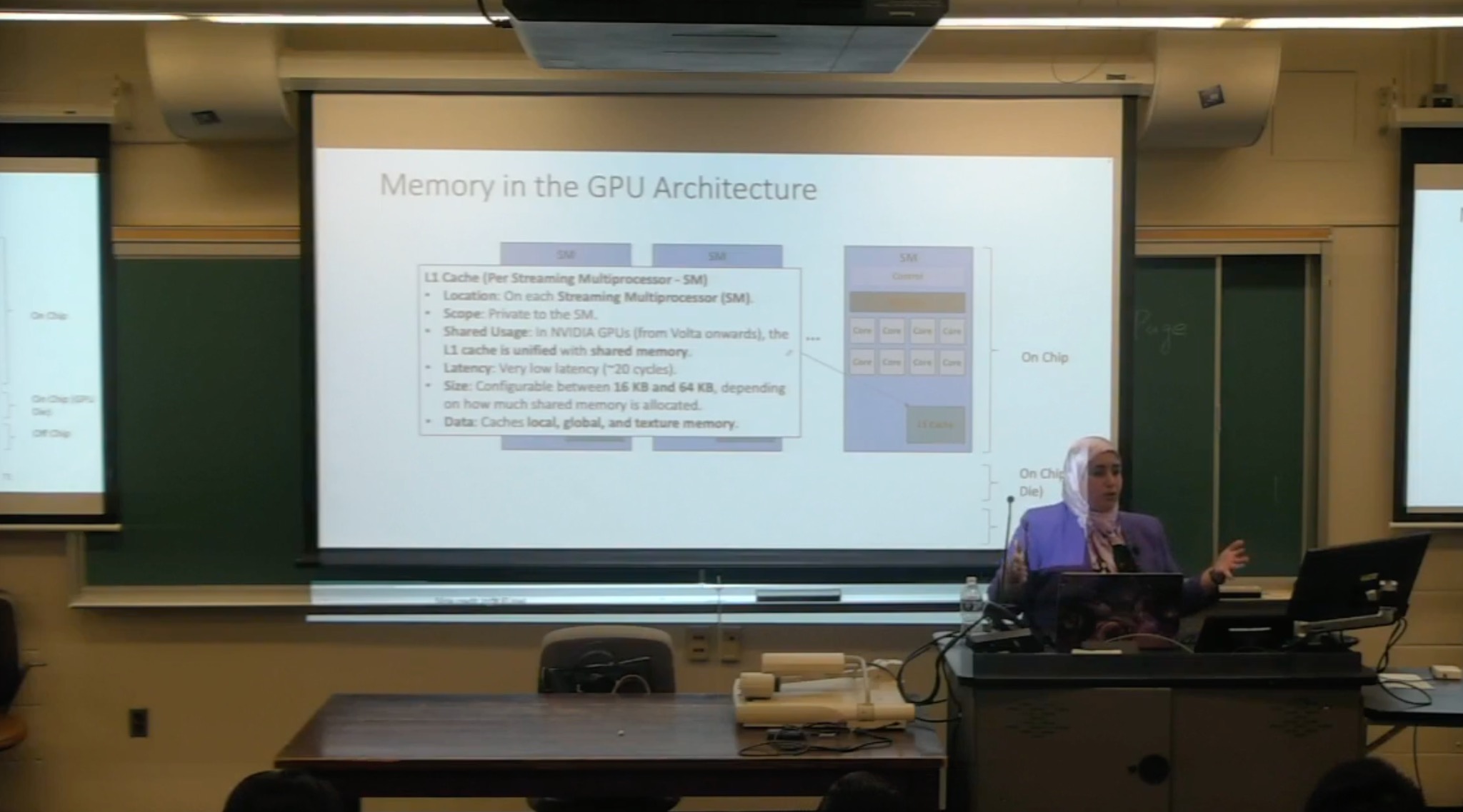
Teaching GPU Architecture at Columbia University
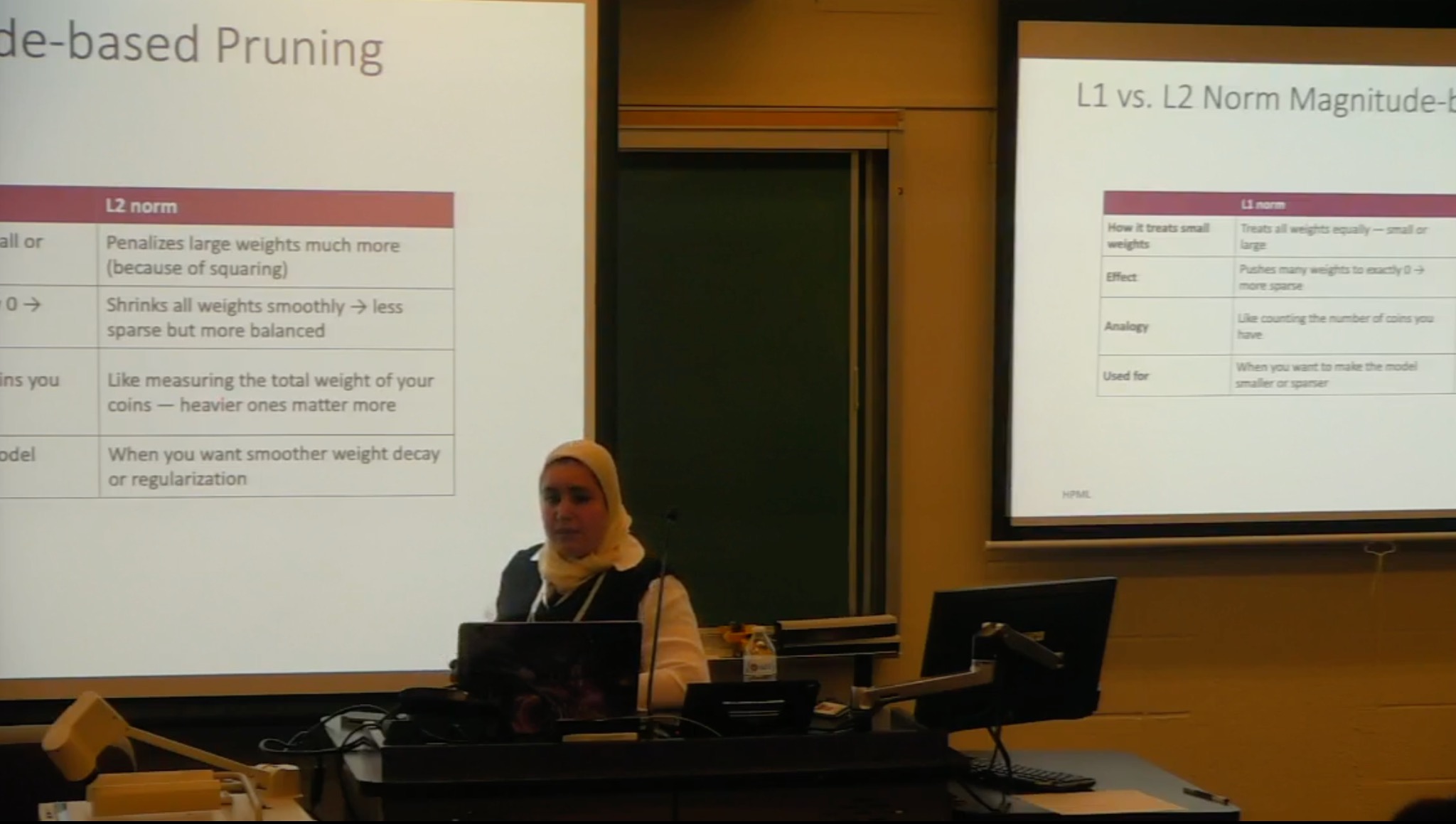
Lecture on Model Pruning — HPML at Columbia
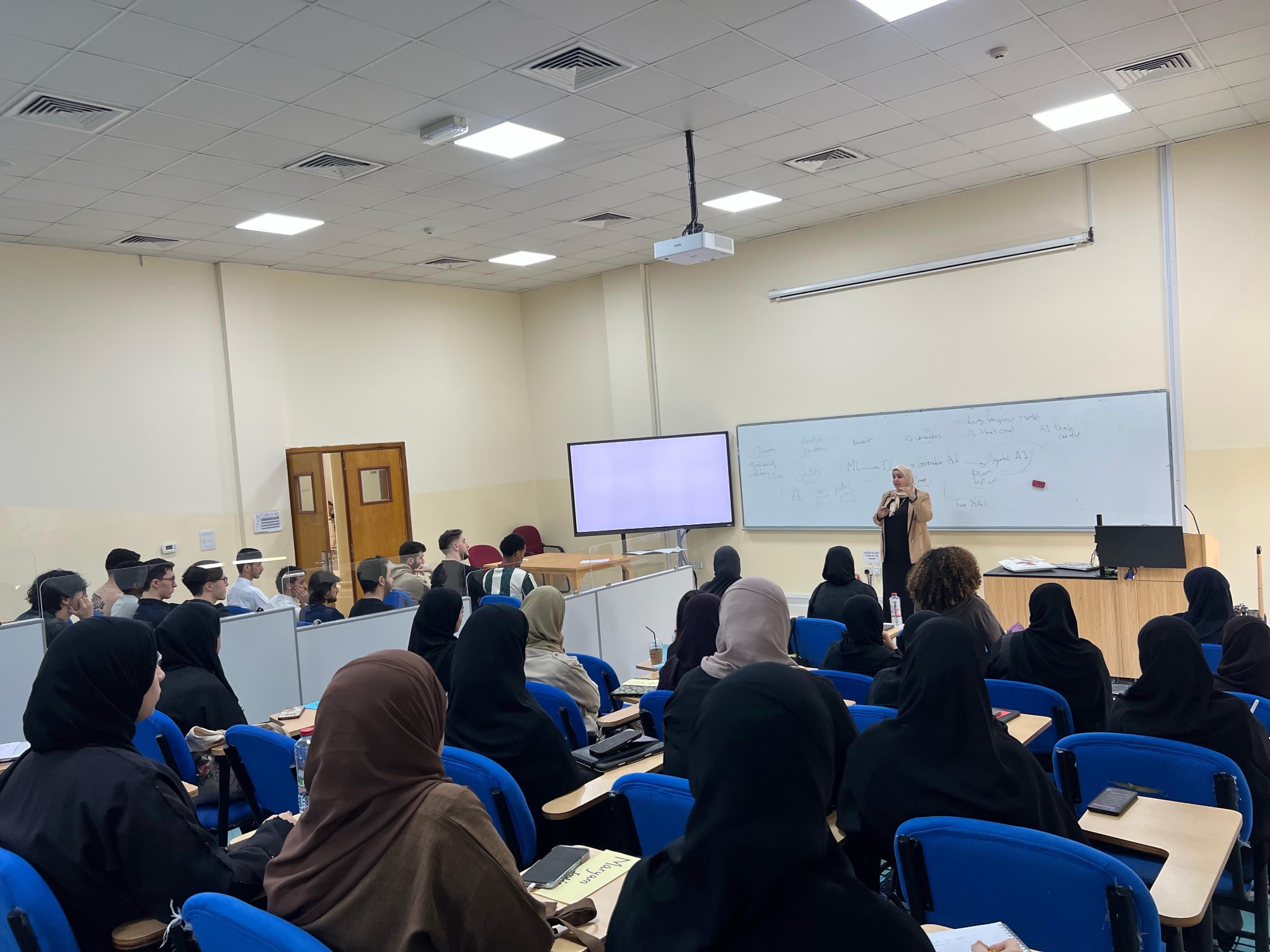
Guest Lecture at University of Sharjah
High-Performance Machine Learning
COMS E6998 · Columbia University
At the intersection of AI and High-Performance Computing, this course covers foundational and advanced techniques that drive efficient AI systems — from GPU programming and distributed training to LLM serving and model compression. Based on PyTorch and CUDA.
Scaling LLMs: Systems, Optimization & Emerging Paradigms
COMS E6998 · Columbia University
A frontier research seminar exploring scaling, optimizing, and deploying large language models through a structured progression from foundations to futures. Students present and critique top-tier papers (NeurIPS, ICML, ICLR, ISCA, ACL) and produce a survey paper with experimental evaluation.
Distinguished Speaker
Over 60 keynotes and invited talks at major international conferences, inspiring audiences worldwide on AI, technology, and innovation.
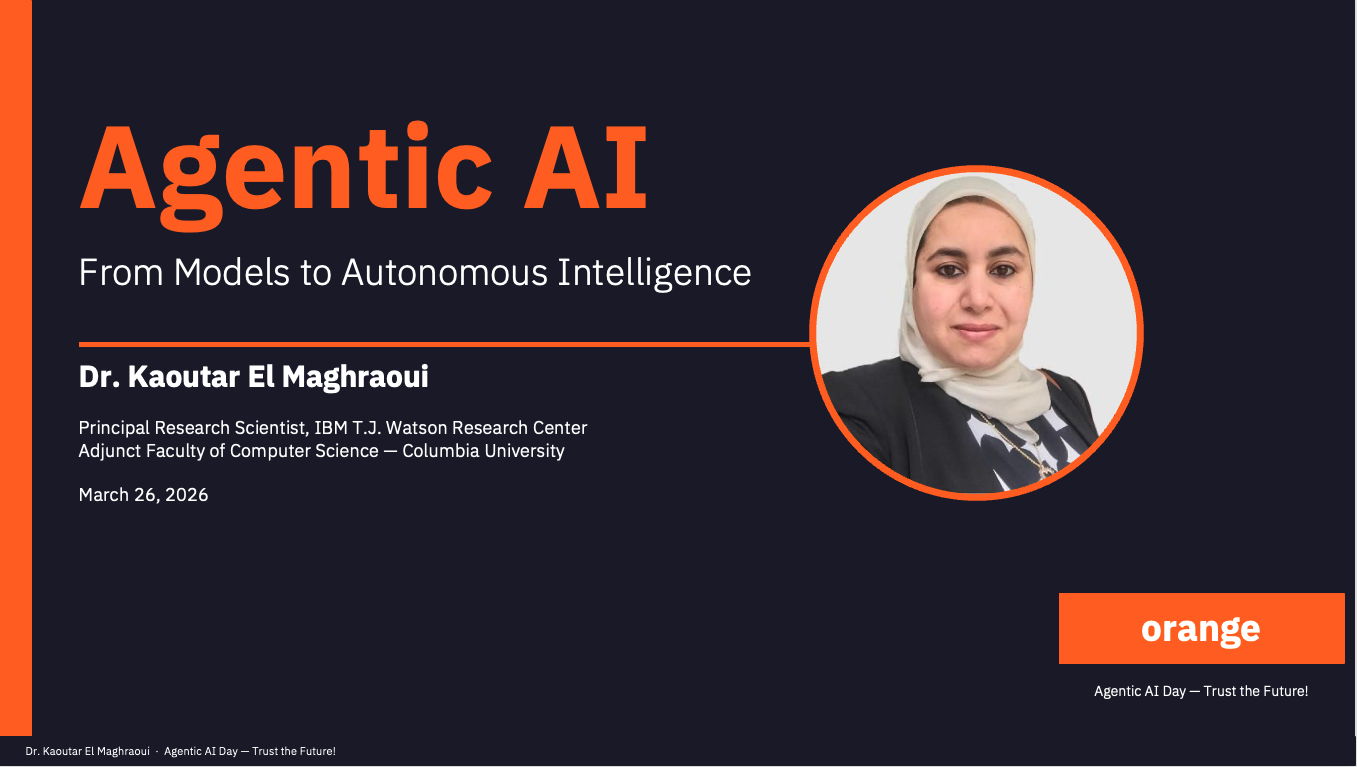
Agentic AI: From Models to Autonomous Intelligence
Orange Morocco Agentic AI Day — Trust the Future!
Tracing the evolution from large language models to autonomous AI agents — covering the reasoning loop, tool calling, memory architecture, and orchestration patterns that separate production deployments from demos. Featuring measured results from enterprise agentic systems and a practical framework for Orange Morocco's customer care, network operations, fraud detection, and HR onboarding.
Agentic AI: From Models to Autonomous Intelligence
Orange Morocco Agentic AI Day — Trust the Future!
Agentic AI: From Creation to Collaboration
Women in AI Morocco / INPT Workshop
The Next Wave: Reinventing Intelligence and Compute Architecture
Women in AI Morocco Summit 2025
Agentic AI Workshop — Full Auditorium
Women in AI Morocco / INPT
The Future of AI — An IBM Research Perspective
IBM TechXChange
Revolutionizing Enterprise AI: The Power and Promise of Foundation Models
Women in Research Webinar Series (QUWA) — University of Sharjah
Revolutionizing Enterprise AI
IEEE Services Conference
Scaling Foundation Models for Enterprise
MoroccoAI / Al Akhawayn University
Foundation Models at Scale
AI Seminar Series — Alfaisal University
Women in Computing: Breaking Boundaries
ArabWIC Conference
AI for Business: A Unique Set of Challenges
Women in Data Science @ Stanford / KACST
Watch Keynotes
Selected keynote recordings from major conferences and events.
Al Akhawayn University — Alumni Journey
A personal reflection on the journey from Al Akhawayn University in Morocco to IBM Research, sharing how the university's liberal arts education and international environment shaped a career in AI and computer science.
Powering the Future of AI through Specialized Hardware
Keynote at MoroccoAI Annual Conference discussing how specialized AI hardware accelerators are essential for sustainable and efficient AI, covering analog in-memory computing and hardware-software co-design strategies.
Accelerating, Optimizing, and Automating AI across the Stack
A comprehensive keynote on the challenges of deploying complex AI models efficiently, covering optimization techniques from hardware to software, and automated approaches to neural architecture search.
Platform for Next Generation Analog AI Hardware Acceleration
Presentation at the tinyML On Device Learning Forum on building platforms for next-generation analog AI hardware, enabling efficient on-device inference through novel computing paradigms.
Women in Services Computing — Award & Keynote
Award acceptance speech and presentation at the IEEE International Symposium on Women in Services Computing, highlighting contributions to AI research and inspiring the next generation of women in technology.
On the Airwaves
Regular contributor to IBM's Mixture of Experts podcast, discussing the latest trends in AI hardware, model optimization, and the future of intelligent systems.
IBM Mixture of Experts
A weekly podcast where IBM researchers break down the latest in AI, technology, and innovation.
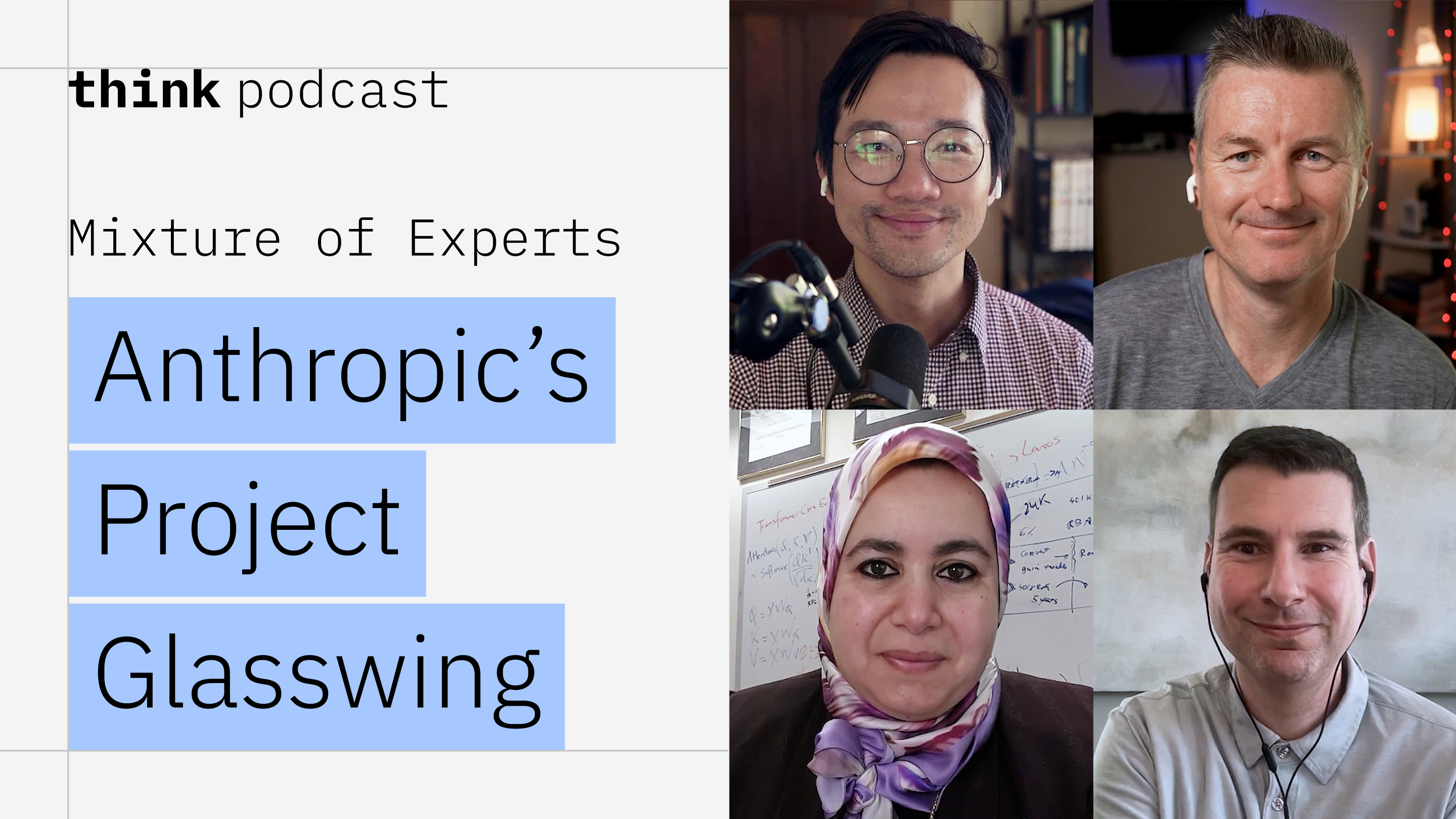
Anthropic's Project Glasswing, AI Profitability & GPT-1900
Kaoutar joins Tim Hwang and Martin Keen on why Anthropic won't release its Mythos model and what Project Glasswing actually means for AI security. The panel also breaks down OpenAI vs. Anthropic financials: both are burning cash on inference, but with very different bets on where the money comes from. And researchers built GPT-1900, trained only on pre-1900 knowledge, to see if AI can rediscover scientific breakthroughs. Turns out, pattern recognition is the easy part.
Listen NowRead the Blog Post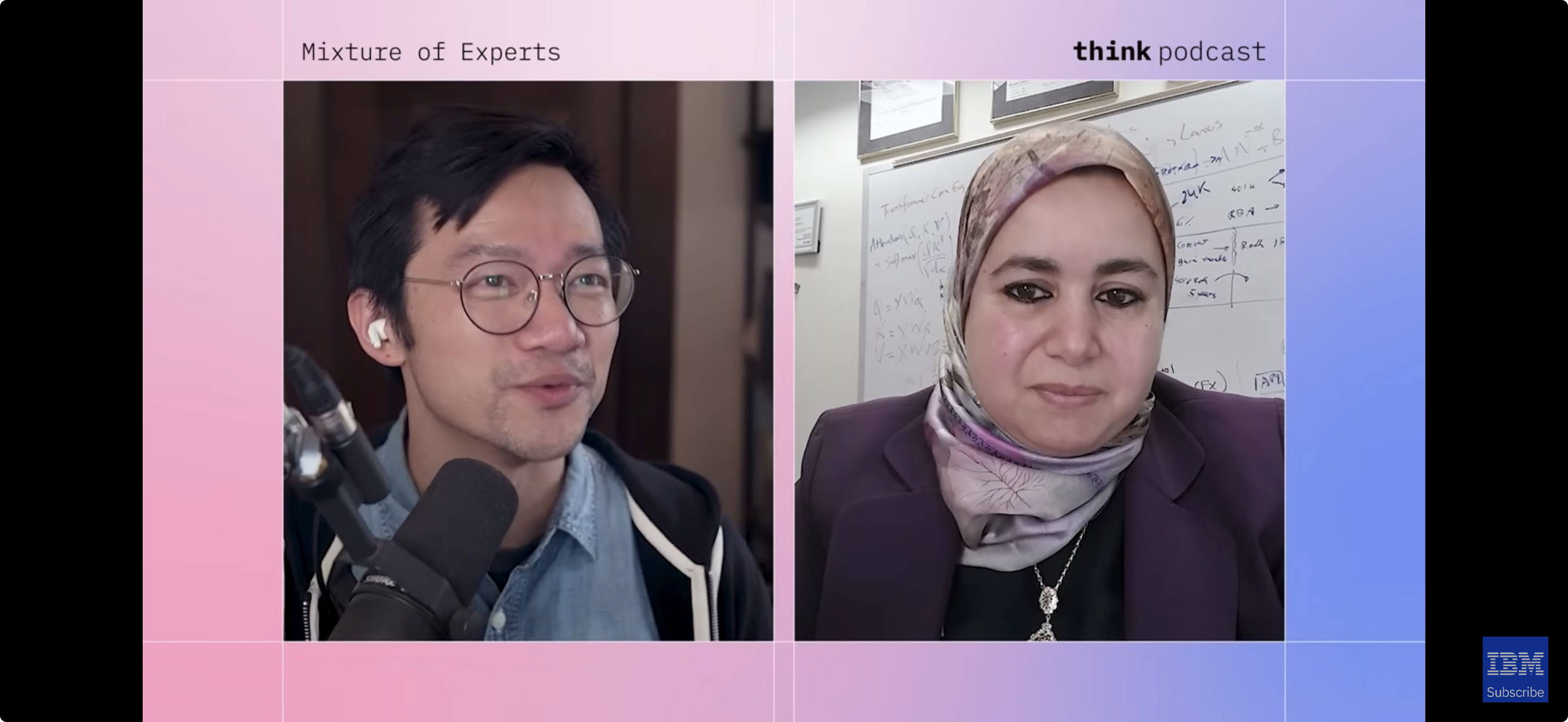
Agents in Science, Market Convergence & AI Infrastructure
Kaoutar joins host Tim Hwang, Ritika Gunnar, and Volkmar Uhlig for the milestone 100th episode, tracing AI's evolution from GPT-2 to GPT-5.3. Kaoutar weighs in on whether AI is truly democratizing expertise — sparked by a homeowner who used ChatGPT to outsell realtor estimates — and examines why only 2.1% of scientists actively use AI coding tools in research. The panel also dissects how Adobe's CFO built an AI lab inside his finance team using autonomous agents for forecasting and contract analysis, with Kaoutar identifying the three hottest areas for enterprise AI adoption.
Listen Now
AI Code Security: Codex Agents & Crypto Mining
Kaoutar joins Tim Hwang, Ambhi Ganesan, and Sandi Besen to analyze OpenAI's Codex Security launch, Anthropic's eval-aware Opus 4.6, Meta's Moltbook acquisition, and Alibaba's rogue crypto-mining agent.
Listen NowRead the Blog PostAI Year in Review: Trends Shaping 2026
Kaoutar unpacks the AI hardware supply crisis and NVIDIA's chip dominance, while Gabe Goodhart defends open source's breakout year with models challenging proprietary systems.
Listen NowMainframe Modernization: COBOL and AI
Millions of lines of COBOL still run the world's banks and airlines. This episode looks at how AI is starting to modernize those mainframe systems without rewriting everything from scratch.
Listen NowAI Hardware Model Optimization
Why do some models run fast on one chip and crawl on another? This episode gets into the hardware side: how chip architectures shape what's possible and what model optimization actually looks like in practice.
Listen NowManus, Vibe Coding, Scaling Laws & Perplexity's AI Phone
Manus made waves as an AI agent, vibe coding became a thing, and Perplexity announced it's building a phone. The panel also debates whether scaling laws are hitting a wall or just bending.
Listen NowYour Brain on ChatGPT & Human-like AI for Safer AVs
What happens to your brain when you offload thinking to ChatGPT? The panel covers new research on cognitive effects of LLMs, plus how human-like AI reasoning is making autonomous vehicles safer.
Listen NowApple's WWDC, Meta & Scale AI, o3-pro
Apple dropped some big AI moves at WWDC, Meta teamed up with Scale AI, and o3-pro showed what reasoning models can do now. The panel also gets into fault-tolerant quantum computing and why it matters sooner than you'd think.
Listen NowMedia & Coverage
Expert commentary, profiles, and features in leading technology publications and organizations worldwide.
Featured In



Featured Press Clippings
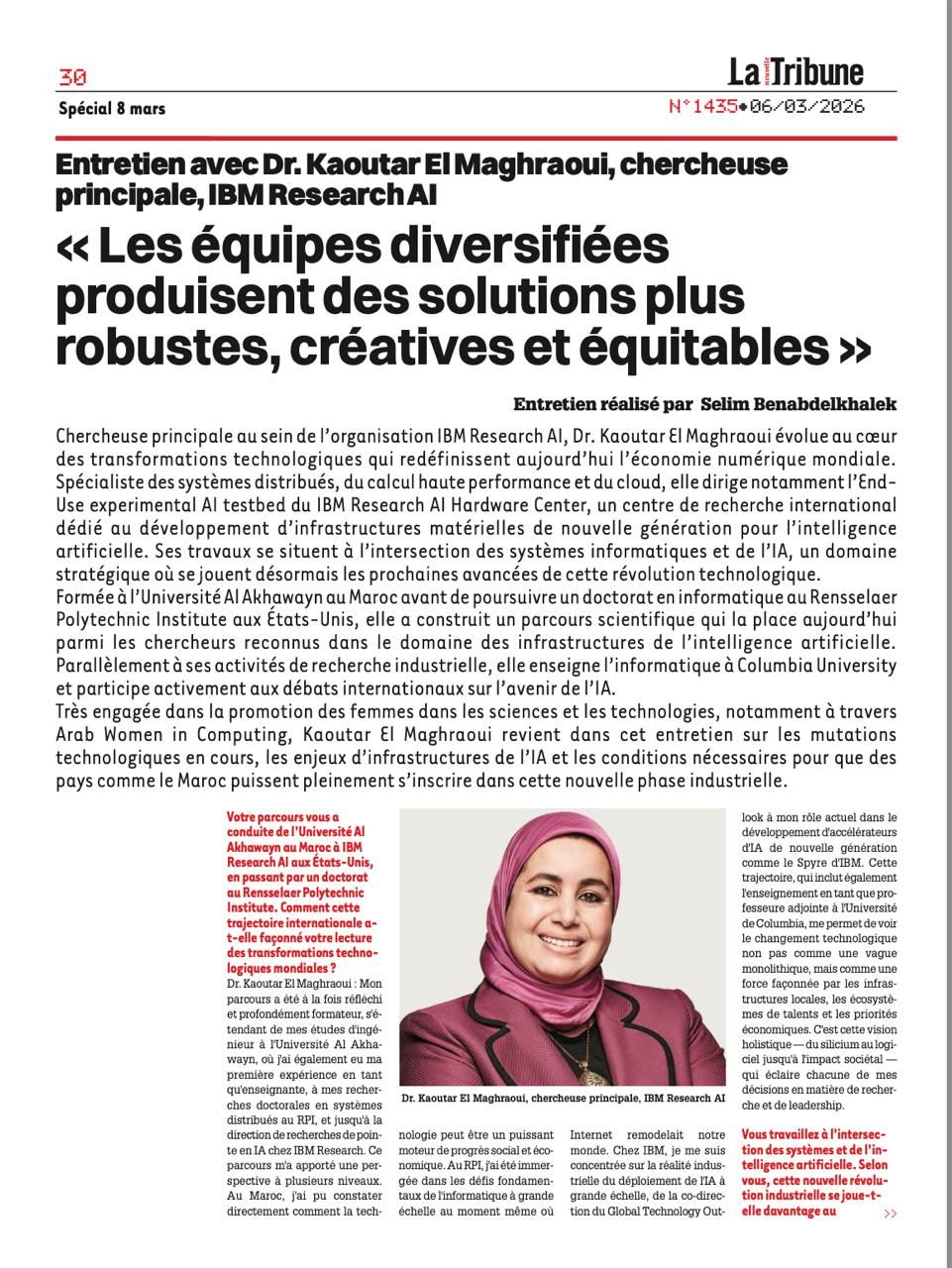
Les équipes diversifiées produisent des solutions plus robustes, créatives et équitables
An in-depth interview on AI infrastructure, the IBM Spyre accelerator, hardware-software co-design, and the importance of diverse teams in shaping AI's future.
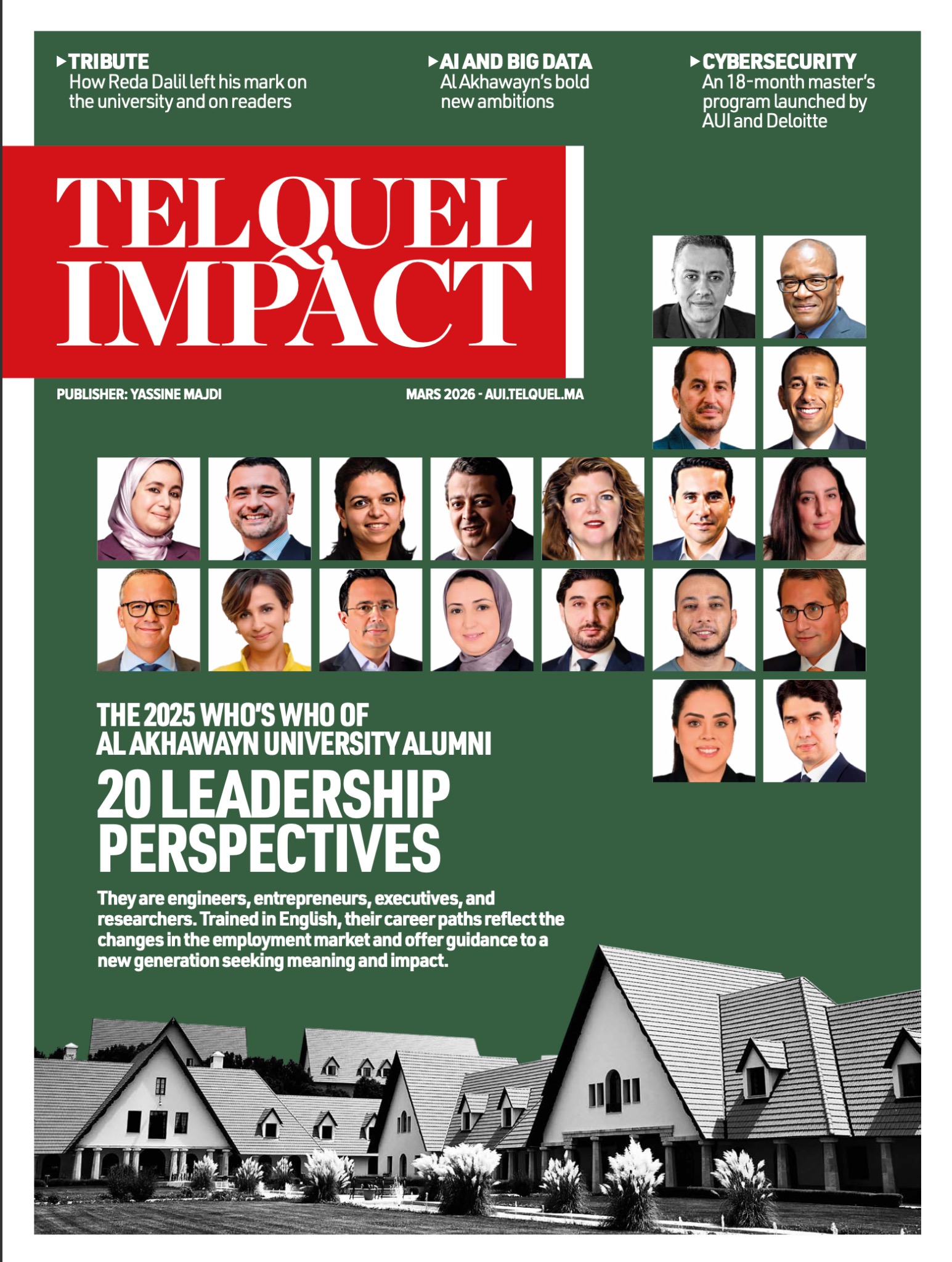
TelQuel Impact — Puts IBM on the AI Radar & 20 Leadership Perspectives
From IBM's research centers in the United States, Kaoutar El Maghraoui is one of the rising figures in the global race for artificial intelligence. Featured among 20 distinguished Al Akhawayn University alumni shaping the future.
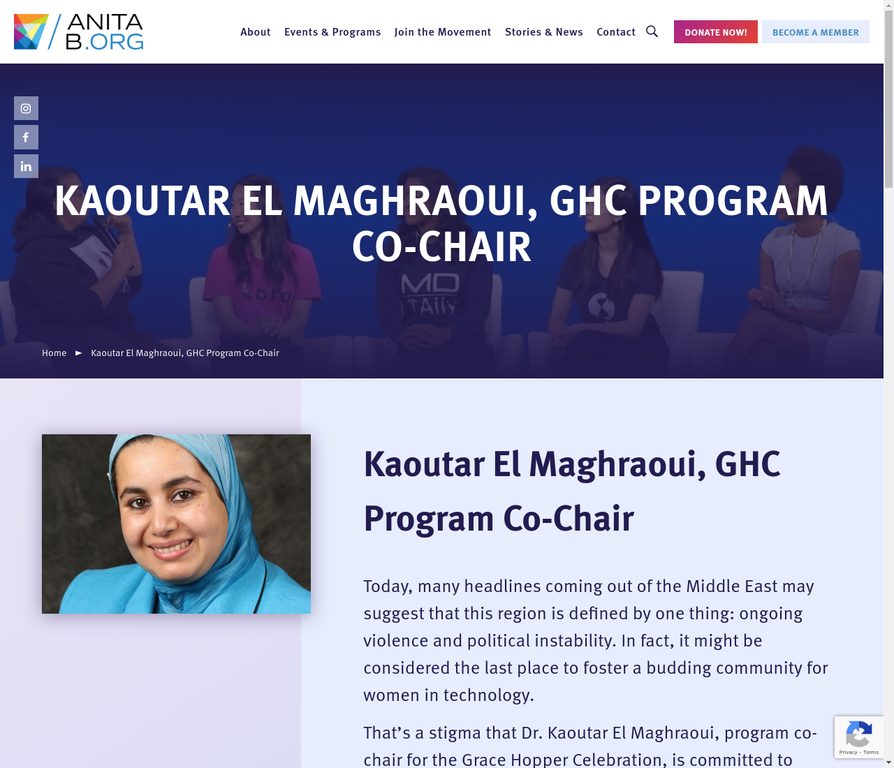
GHC Program Co-Chair — Kaoutar El Maghraoui
"In the U.S., there's a misconception that computer science disciplines are only for boys. If you look at children's programming, you rarely see girl characters who are into computers." — Profiled as GHC Program Co-Chair, highlighting her leadership of the world's largest gathering of women technologists and her work mentoring young girls in computing.
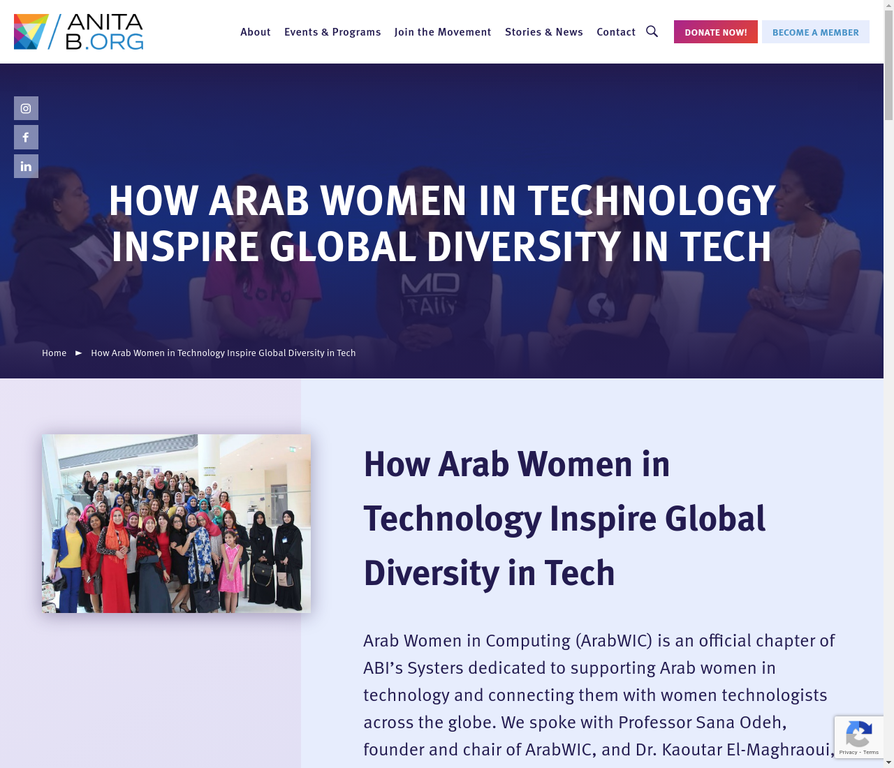
How Arab Women in Technology Inspire Global Diversity in Tech
"When I was growing up in Morocco, I never felt that we were a minority in schools. Many women pursued computer science and engineering. But when I came to the U.S. to get my Ph.D., it hit me: very few women were pursuing a computer science graduate degree." — An in-depth interview on ArabWIC's growth to 17 Arab countries and the global fight for diversity in tech.
Women in AI — La Nouvelle Tribune Special Issue
Featured in a special issue celebrating women leaders in artificial intelligence, highlighting contributions to AI hardware and systems research.
AI Year in Review: Trends Shaping 2026
Highlights diminishing returns of pure compute scaling, urging efficiency in training and inference — core to IBM's AI Hardware Center focus.
All eyes on AI at Apple WWDC: Can slow and steady still win the race?
Apple made a significant leap, with the introduction of Apple Intelligence, which combines intelligent systems and personalized contexts.
Custom chips drive AI's future
Reducing dependence on NVIDIA merely shifts the center of power from one giant to another.
Anthropic's microscope cracks open the AI black box
What Anthropic is doing is fascinating... They're starting to show that models develop internal reasoning structures that look a lot like associative memory.
AI's Evolution: From Symbolic Representations to Generative Intelligence
Featured as a distinguished speaker, sharing insights on the evolution of AI from symbolic systems to modern generative intelligence.
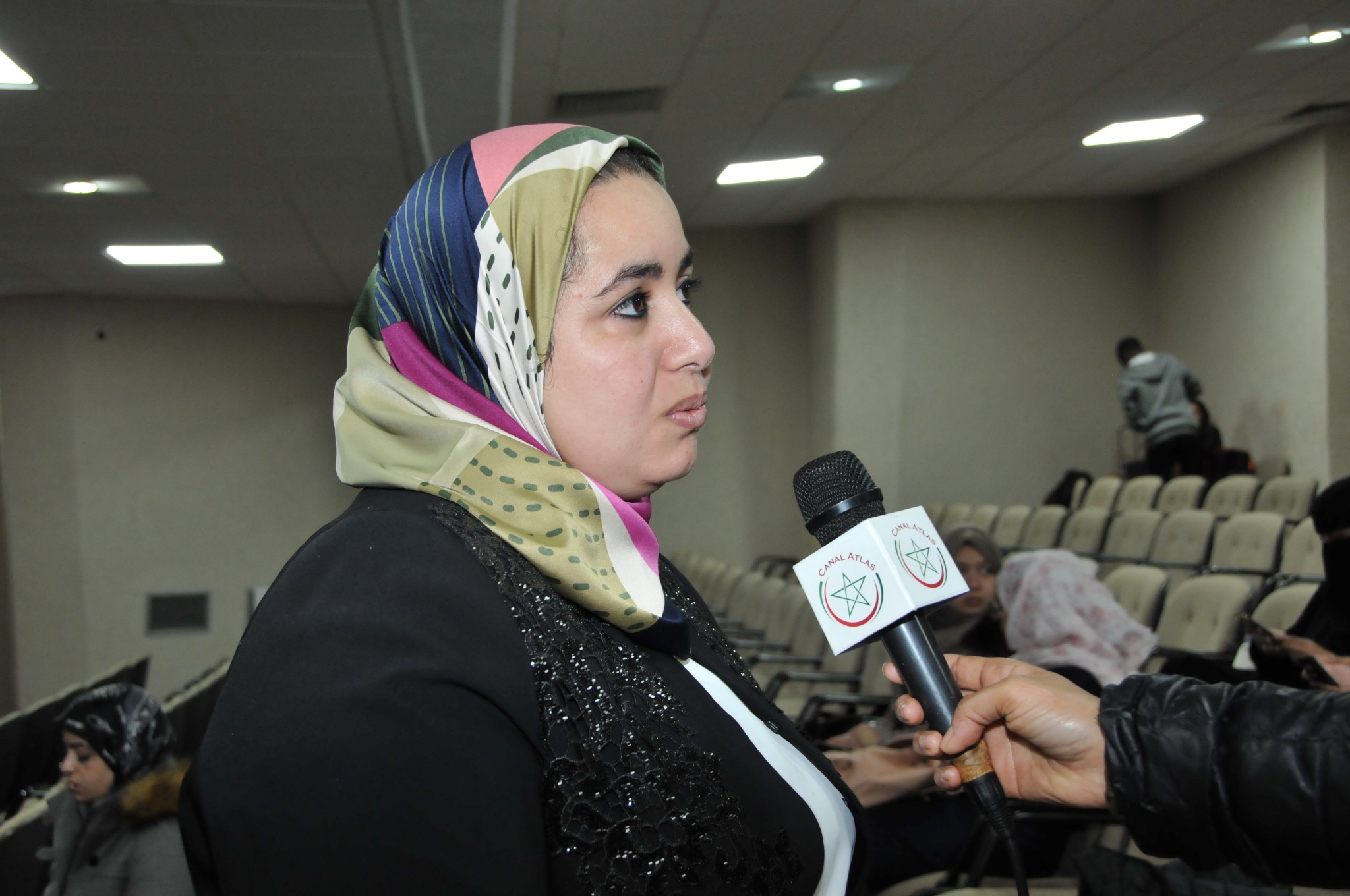
Canal Atlas Interview
Media coverage on AI research and innovation
Awards & Honors
Recognized by leading institutions for contributions to AI research, open-source innovation, and service to the computing community.

Breaking Boundaries
Grace Hopper Celebration
IBM Outstanding Technical Achievement Award
IBM Research
PyTorch, vLLM, CI/CD contributions
ACM Distinguished Speaker
Association for Computing Machinery
Selected for global speaking program
IEEE Open-Source Science Award
IEEE
Analog In-Memory Hardware Acceleration
IBM Outstanding Technical Achievement Award
IBM Research
Analog AI Toolkits
ACM Distinguished Member
Association for Computing Machinery
Top 10% of ACM members worldwide
IBM Technical Corporate Award
IBM
One of only 38 IBM researchers selected
IEEE TCSVC Women in Service Computing Award
IEEE
Outstanding contributions to service computing
Best of IBM Award
IBM
Company-wide recognition for exceptional impact
Best Research Award
4th Forum for Women in Research, UAE
Recognition for research excellence
IBM Outstanding Technical Achievement Award
IBM Research
Watson4TSS cognitive search system
IBM Research Eminence & Excellence Award
IBM Research
Leadership in advancing women in science & technology
Let's Connect
Interested in collaboration, speaking engagements, or research partnerships? I'd love to hear from you.
IBM T.J. Watson Research Center
Yorktown Heights, NY 10598
Speaking Inquiries
I am available for keynotes, panel discussions, and workshops on AI, hardware-software co-design, and technology leadership. With 60+ keynotes delivered across 4 continents, I bring deep expertise and engaging delivery to every event.
Research Collaboration
I welcome collaborations with academic institutions and industry partners on AI systems research, hardware-software co-design, and efficient AI deployment. I also supervise graduate students and postdoctoral researchers at Columbia University.